BJÖRN
HEYDAY


Branche: Professional Services | Reading time: 2 min.
Since 2014, the National Military Museum in Soest has been the most important place for exhibiting countless objects from Dutch military history. More than 400,000 items from the National Collection are on display. What visitors don’t see, but which is essential for good operational management, is the excellent day-to-day monitoring and follow-up of the operational process in the building. HEYDAY Facility Management, a partner of Facilitor, plays a central role in this.

BJÖRN
HEYDAY
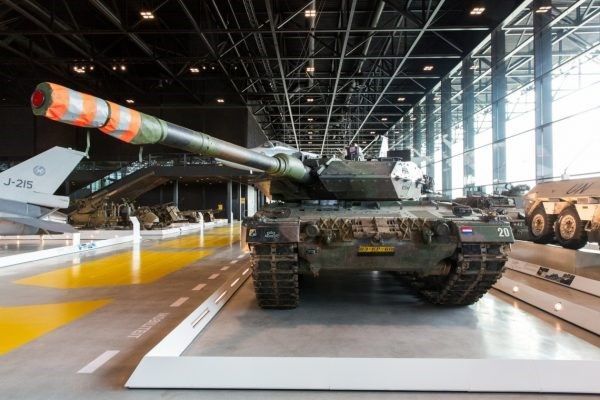


The collection in the National Military Museum highlights the significance of the Dutch armed forces in the past, present and future. The museum represents every aspect of the armed forces, and is composed of the collections of the former Army Museum and the Air Force Museum. The Royal Netherlands Marechaussee and Netherlands Marine Corps are also represented in the collection. The National Military Museum in Soesterberg opened in 2014. HEYDAY was awarded a 25-year contract to work on behalf of Heijmans in a consortium with Heijmans and Vermaat Horeca BV. The contracting authority is the Netherlands Ministry of Defence, while the Royal Netherlands Defence Museum Foundation is the user of the building.
Heijmans called in HEYDAY Facility Management to make sure the facility management in the museum runs smoothly. Björn Recken is HEYDAY’s client manager, and as such involved in the execution of the service contract. ‘We’re jointly responsible for the operation of the National Military Museum, making sure agreements made are complied with, and monitoring and measuring all the services related to facility processes and availability of buildings and functions. We’re working with Facilitor to gain insight into all the services provided. We wanted a system which recorded the correct data, and Facilitor provides exactly what is necessary and desired. With this system, we can measure, record and demonstrate our performance in terms of services and the availability of spaces and buildings. It puts us in a position to respond properly to issues that arise. Another advantage is that Facilitor employees understand our service contract and its sensitivities, which is reassuring. The ability to switch quickly, the robustness of the system and the reliability of service measurements are other major benefits for us.’
The consortium works on a DBFMO basis (Design, Build, Finance, Maintain and Operate), the most integrated type of contract in a public-private partnership. The PPP contract sets out requirements in terms of aspects such as climate impact, the provision of services such as cleaning, security and catering, the availability of office and other space, and the prompt repair of defective parts. Recken: ‘It is important that we can continuously demonstrate if all those involved meet these requirements. All the required information is recorded and updated in Facilitor, along with repair times and weighting factors. Together with Facilitor, we examined all the options the CAFM needed so that we would be able to monitor the correct information. Facilitor’s modular system is based on standard modules, so we had to develop additional functionalities together. These are now included in the standard. This has resulted in a system that can perfectly monitor the requirements of the service contract.’
Facilitor therefore made all the variables needed for measurement and analysis a part of the system, and now HEYDAY always has an overview available of the services provided. Recken: ‘Every month, we draw up a monitoring report showing the services provided in the previous period, and the problems and time taken to repair them. This output is of great importance to us and our contracting authority, because our agreements are based on it. We’ve found Facilitor to be a reliable partner. We regularly work with them, because they can perfectly deliver the specialisations we need for our customers. For us, that’s very valuable.’
By Marieke Stokkelaar, Open Up Communicatie, publication December 2020
Share this article