Arjen & Ed Jan
MN


Branche: Financial Institutions | Reading time: 3 min.
MN is one of the largest pension providers and asset managers in the Netherlands, with offices in The Hague, Amsterdam and London. Assets under management: € 123 billion.
We were using a simple package purchased many years before to process room reservations. It was sadly outdated. Sometimes there were double bookings, or it was impossible to give a colleague proper information about their reservation. It was causing an increasing number of complaints from internal customers. Compared to the high service level that we offer our own clients, it was obviously high time to professionalise this system.
Arjen & Ed Jan
MN

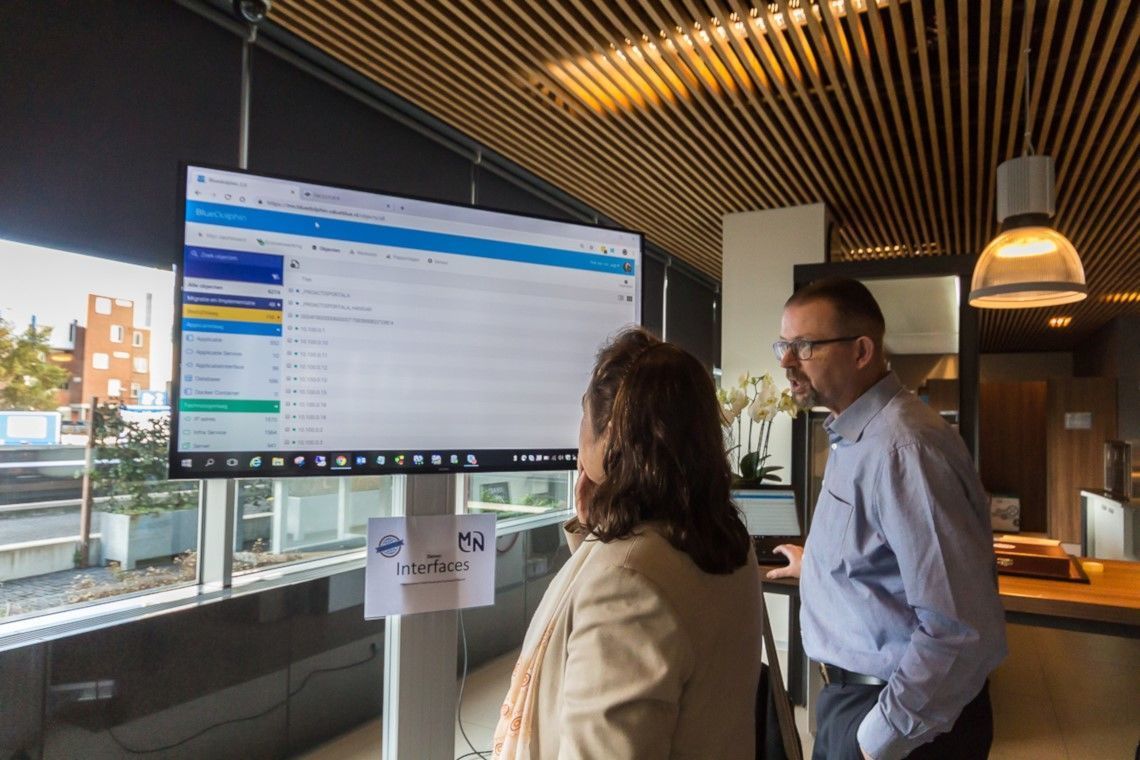

Arjen van ‘t Klooster, Facilities Manager at MN since 2013, is talking about his experiences. MN is one of the largest pension providers and asset managers in the Netherlands. Arjen is accompanied by his colleague Ed Jan Boting, senior facility assistant at MN, on a weekday at the organisation’s head office in The Hague (a 17-floor office skyscraper, located right alongside the A12 motorway). They explain that booking a meeting room used to require a lot of work; the customer would call and state their requirements, and the facility desk employee would enter the details into the system. ‘It took a lot of hours, which was obviously a waste.’ A search for an alternative system to improve this situation was started, and included a visit to the Facility trade fair. The Facilities Department submitted an application for the purchase of a professional facility management information system, which was approved by the management. Then a Schedule of Requirements was drawn up, followed by an RFP. Three software suppliers were given the opportunity to make a presentation and explain their software packages.
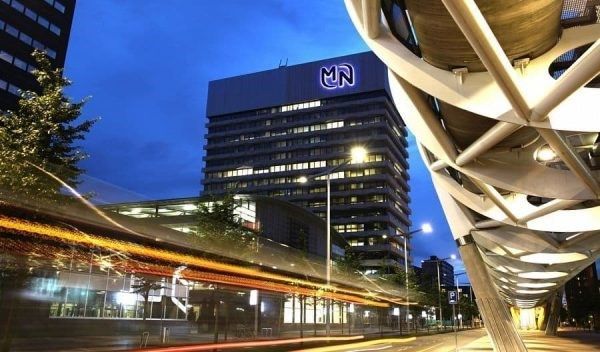
The head office of pension provider MN in The Hague, alongside the A12 motorway.
Right from the initial presentation, a feeling arose that Facilitor was the right partner for us. This has been confirmed by the follow-up process, the excellent cooperation, the delivery of the system, and the aftercare
When the Facilities Department came across Facilitor, they were enthusiastic about the modular structure, functionalities and scalability, among other aspects. When it turned out that the system was fully web-based, they were even more positive. ‘With a SaaS solution, you pay a one-off fee for the hours involved in the implementation. You also take out a subscription, and pay a fee based on the modules purchased and the number of users. This completely changes the financial picture, as no major investment up front is required. A study showing that the system and the SaaS environment could also meet the security standards of MN’s IT department sealed the deal for Facilitor.
The next step was to set up the system, a job taken on by Ed Jan Boting, together with a colleague. For two months, they spent virtually all their time collecting inventory data, taking photos of all the rooms, adding specifications of existing ICT equipment and other facilities, etc.
We throw away less coffee, and we’ve reduced the amount of catering work
As the system began to take shape, it was tested by a few key users, such as secretaries, on various occasions. This provided useful information about aspects that needed clarification, and ways to make the system easier or more logical to use. Thanks to the adjustments made, the go-live on 2 March 2015 went smoothly. Contacts with the secretaries also yielded some other useful information. Boting gives an example: ‘We made sure there was a pot of coffee and tea at every meeting. A number of secretaries expressed doubt about the usefulness of this. This has now been changed in the system. A user has to actively tick the box if they want that coffee. The effect is fantastic; we throw away less coffee, and we’ve reduced the amount of catering work.’ The system can be accessed via a self-service portal on the intranet. Every member of staff at MN can book a meeting room from their laptop and, depending on their level of authorisation, indicate their requirements in terms of catering and other facilities.
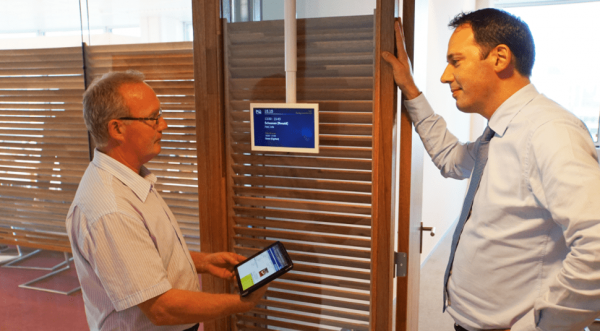
Ed Jan Boting (in the photo on the left), senior facility assistant at MN, in conversation with Arjen van ‘t Klooster, facilities manager at MN.
To make things even easier and more customer-friendly, Facilitor Mobile will soon be available to every employee. Van ‘t Klooster is looking forward to this application, which is currently only available to facility staff. ‘Imagine a colleague, for example, who is looking for an empty meeting room on the 15th floor, the meeting floor, and sees that the rooms there are full. People then tend to give up quickly. However, I can see from the occupancy figures that there’s usually enough meeting space available elsewhere in our building. If this colleague clicks the app on their phone, they can see virtually instantly which rooms are available in the building in real time. They can reserve the room immediately, and make their way there.’ The app is also useful for an employee who comes across an empty room when looking around for a place to hold a meeting. Soon, they will be able to use their phone to scan the QR code on the Sentido screen located next to the door of a meeting room, enter some details, and reserve the room.
Van ‘t Klooster is convinced that the introduction of the app will bring a number of positive effects; the occupancy rate of the meeting rooms will increase, there will be less frustration among employees who think there’s no meeting room available in the building, and costs for meetings held outside the office will decrease dramatically. There’s yet another advantage to the system; it’s really easy to swap rooms. Van ‘t Klooster explains how: ‘Imagine you reserve a room for 12 people, but it turns out later that only 8 will be turning up. Previously, the meeting would have gone ahead anyway, but this isn’t the best way to use space. At the facility desk, we can now easily change reservations, so that 8 people meet in a room suitable for 8 people, and the larger room become available for others. When it makes such a change, the system also immediately adjusts the catering to the new number of participants, which in turn means more savings and less waste.’
When it changes a reservation, the system also immediately adjusts the catering to the new number of participants
The CAFM at MN currently used for room reservations is also deployed for visitor registration and parking management. The next step could well be implementing the service management module so that other complaints and alerts received by the facility desk can be processed. This is still supported by the IT system at the moment, but in the long run, Van ‘t Klooster would rather link up with the function offered by Facilitor. ‘I’d like to know about any recurring complaints. I could then take measures that go beyond carrying out the same repair over and over again. A CAFM/IWMS system gives me access to that information, and makes things easier.’
How much will the system save in terms of costs? ‘It mainly saves man-hours at the facility desk,’ says Van ‘t Klooster. ‘We reserve about 17,000 rooms on an annual basis. In the past, this involved lots of phone calls to the facility desk. That number has now decreased drastically, because employees personally reserve their rooms. It means a lot less work for the facility desk, and leaves more time for other issues.’
Looking back, van ‘t Klooster and Boting are satisfied with how things have gone so far. The cooperation with the supplier is excellent. Boting: ‘We now know the people at Facilitor better, so that makes communications easier. If we have any questions, they know the situation at MN through and through. Sometimes a problem crops up, but it is addressed really quickly. It is also really satisfying if we have an idea for a change to the system, and the supplier responds, ‘Great idea, we’ll do that.’ It means all Facilitor customers share the benefits. It also works the other way around. That’s something I find powerful.’ Van ‘t Klooster concludes: ‘This system saves us cash, saves the facility desk time, and reduces waste as we throw less away. Customer satisfaction has also increased. If the occupancy rate of the meeting rooms continues to increase after the app is taken into use, we will have achieved our goal.’
By Gerard Dessing, Facto Magazine, publication 2015
Share this article