Sander
Heyday FM


Branche: Facility service providers | Reading time: 4 min.
HEYDAY, previously AAFM Facility Management, is a major player in facility management. For more than 15 years, the company has been helping organisations optimise facility services; either completely, from organisation to management and direction, or partially. The HEYDAY Facility Institute provides customers with temporary expertise and advice regarding facility issues. It offers tailor-made solutions for every unique request, focussing on efficiency while not losing sight of the people working or visiting.

Sander
Heyday FM



Groups looking for a meeting room, people who needlessly occupy a flex desk and meeting rooms with nobody in them but which have nevertheless been reserved… as you can imagine, these kind of things cause a lot of frustration in the workplace. People get distracted from their work, or waste time looking for a place because they think everything is reserved. HEYDAY Facility Management decided that there had to be a better way. It was time to come up with a system that works, not just on paper, but in the day-to-day reality.
Sander Vogels is a Business Information Specialist at HEYDAY, where his job involves studying the effective use of spaces, among other things. He wanted insight into the actual use of the spaces and workplaces available at HEYDAY’s head office.
‘We were mainly concerned with using workplaces efficiently, and changing people’s behaviour. If you reserve a space or workplace, we expect you to use it, or at least cancel it when you realise it’s no longer necessary. However, how do you change behaviour, or provide insight into availability? The answer turned out to be deploying sensors in combination with Facilitor.’
The core activity is Integrated Facility Management
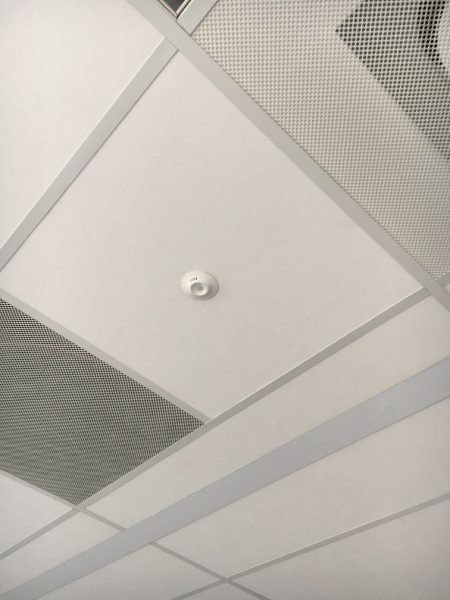
Motion sensor in the ceiling
The HEYDAY building is spread over 3 floors and offers 100 workplaces. Employees are regularly at work on location at their clients, so most workplaces at HEYDAY are flex desks. ‘We noticed that lots of employees and business relations were coming in, taking possession of workplaces, and then disappearing into meetings. This meant that workplaces were occupied unnecessarily.
To offer everyone the certainty of a workplace, we opted for a reservation system in combination with sensors. The workplace is released after no movement is detected for 15 minutes. We also created storage space for coats and office supplies. This sensor information is anonymous, however. We’re not shown which individual employees are guilty of unnecessary “claiming”,’ explains Vogels.
The same principle applies to conference rooms. Employees can reserve rooms via the IWMS, including all the required facilities. An interactive touchscreen is located centrally on each floor. It shows which meeting room is located where on a map, the reservations made, and whether the room is actually being used. This makes it immediately clear to everyone what the options are. You can also make changes and reservations on the touchscreen. If a sensor doesn’t detect any movement in a certain room, the person who reserved the room receives a message asking whether they want to release the room.
The answer ultimately turned out to be deploying sensors in combination with Facilitor
Using a reservation system in combination with sensors provides benefits beyond gaining insight into current availability and reducing frustration in the workplace. Vogels: ‘All the collected data gives us lots more insights. One example is the reduction in energy costs. By first reserving one entire floor before releasing the next, we save on lighting and heating.
In addition, we’re continually learning which spaces are most popular, and how long a meeting in a certain room lasts on average. For example, there’s a high demand for small rooms for meetings between 2 people that usually last 30 to 45 minutes. These are the standard times that we now offer for this type of room. We’re also updated in real time about exactly how many people are present at any given time. This info is important for the company canteen staff, as they know how many lunch meals they have to prepare that day. Evidence-based facility management is really taking off within facility management. They are the eyes and ears of the FM staff of the future.’
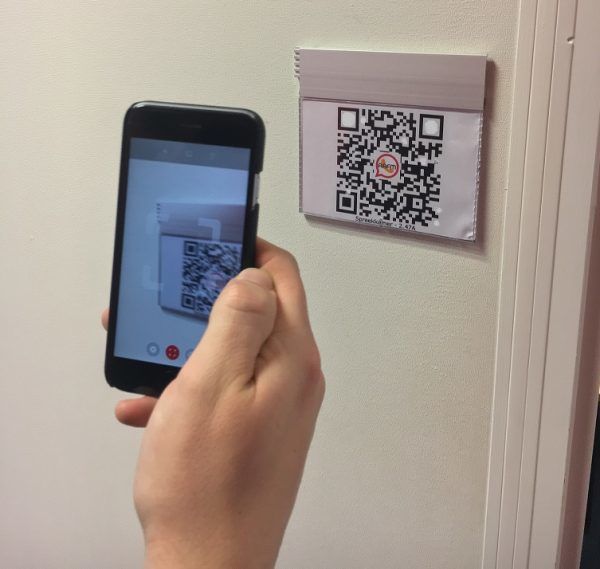
Scanning QR codes with Facilitor mobile
Vogels really enjoyed working with Facilitor. ‘What particularly appeals to me is that when it comes to the system, they think in terms of standard solutions, rather than custom solutions which are difficult to maintain. It has to be broadly applicable. Since this approach allows us to design the system according to the wishes of the clients, Facilitor is the right partner for us. We complement each other well.’
HEYDAY is currently developing the MAX app, a facility application for convenient services. ‘We’re developing it together with Office App. Employees can use this MAX app to arrange all kinds of facility matters, and we visualise real-time sensor information. It covers things like reserving a meeting room, registering a visit, having clothes dry-cleaned, and ordering a cake, meals or flowers. Our goal with this app is to make life as easy as possible for our clients’ end users. By offering our client an app of this type, we enable their staff to work more efficiently. Staff can also use the app to send alerts about the building they work in, and arrange other company-related facility matters. All alerts are forwarded from the app to the CAFM, and vice versa. It’s a great service for our customers, in which our partnership with Facilitor was extremely positive.’
By Marieke Stokkelaar, Open Up Communicatie, publication July 2017
Share this article